Tuesday, September 12, 2006


Sunday, September 10, 2006
An Increase in Automobile Prices in Iran
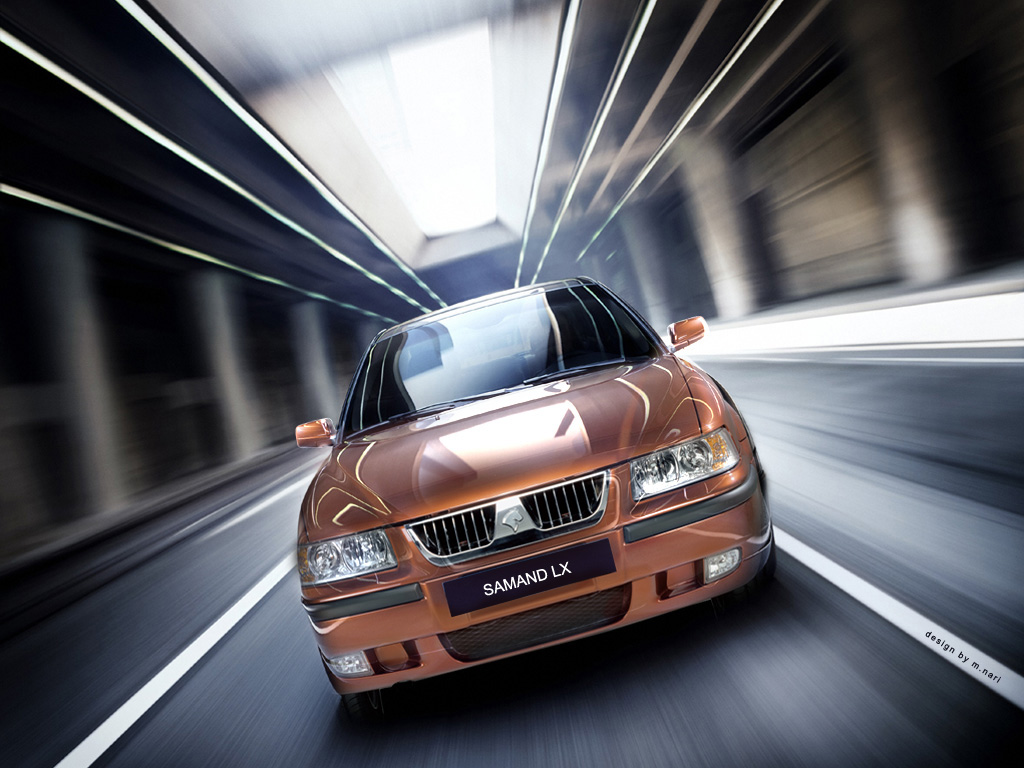
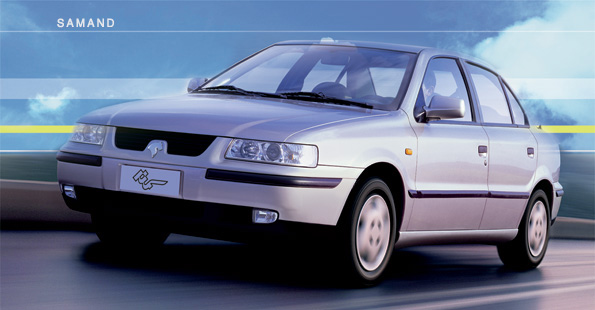
BBC Persian service has reported an increase in automobile prices in Iran. I have checked the dailies such as Shargh, Sarmayeh and Rooz, I could not find similar reports, so following speculation is challengeable by contradicting evidence
In following an import substitution strategy and to boost national pride Iran has established domestic manufacturing lines to assemble automobile. Iran National Automobile Manufacturing Group known as Iran Khodro is the largest of these companies. There are also other firms such as SAIPA, started as a Renault manufacturer and others. Seeking to establish a self sufficient car manufacturing industry Iranian government banned importing foreign made cars for almost a decade; even now tariffs to import foreign manufactured cars are staggering.
In this monopoly situation purchasing a car became a rather difficult process. Queues were made of customers and the right to purchase a care at factory price became a market commodity as well. Interestingly an active market for used cars was developed as well, however hardly one can notice a depreciation of nominal price for cars during last decades. Although this increasing trend was contributed to the inflation and general increase in price index, one should notice demand for cars in Iran was not and is not purely based on utility maximization behavior.
The very low gas prices in Iran and ingenuity of local mechanics[1] keep the maintenance cost of automobile relatively low. On the other hand the real value of money keeps declining because of ever present inflationary conditions. In the absence of higher than zero real interest rates from banking system, households save in any form of durable products available to them: hard currency, golden coins[2], real estate and cars. One also must mention the increasing role of Stock Exchange Market an increase in household savings in the form of bonds and shares; however that has proved a risky endeavor in the long run[3].
It could be argued that Iranian household has learned to diversify its saving portfolio in order to reduce its risk. It also could be argued that demand for cars also is determined by the risk factor.
According to BBC the price of Samand a domestic product has increased from 10’800’000 Tomans[4] to 11’800’000, Price of Peugeot Pars from 16’900’000 to 17’800’000 Tomans. The increase in the case of Peugeot 206 is 400’000 Tomans for its different types. The price of Pride, the most popular car in country, has increased from 6’850’000 Tomans to 7’150’000 Tomans. These show an increase of 4% to almost 10% for the price of different makes and models in market.
Some speculate that the increase in automobile prices is initiated by decrease in the quantity supplied, which is because of lack of parts and Iran Khodro exports. However if the increase is universal for all models and makes, one might conclude that the increase in automobile prices could be caused by a shift in the demand.
It is certain now that government would not implement rationing of car gases to reduce the fuel imports. Thus might demand has increased because of cost of maintenance has remained low. However I would like to argue that the gas price would not be lower than before and the contribution of this policy to increase in demand should not be exaggerated.
The question is that if market demand for cars has increased because of decrease in rate of returns of stocks and an increase in the risk factors? A few months ago there was an increase in the price of gold in the market, which was controlled by increase in the supply of gold by the Central Bank of Iran. Could this be the second wave of increase of demand to save in the form of durable products excited by an increased risk factor and public expectation of a higher inflation rate?
Coming months would answer that.
[1] They actually fix the parts instead of ordering a substitute, thus one pays for labor and not the part.
[2] Traditionally Iranians are fond of golden coins and up to day it is a measurement of value, a memorable gift and a way of saving. As a gift it is more of a gift card whose real purchasing power
[3] The reaction of Tehran Stock Exchange to the last year presidential election results in major losses by middle class shareholders.
[4] Currently 1 USD is 920 Tomans in Tehran’s Bazaar, however one might argue that an exchange rate based on Purchasing Power Parity should be implemented. Thus I keep the prices at local level.
In following an import substitution strategy and to boost national pride Iran has established domestic manufacturing lines to assemble automobile. Iran National Automobile Manufacturing Group known as Iran Khodro is the largest of these companies. There are also other firms such as SAIPA, started as a Renault manufacturer and others. Seeking to establish a self sufficient car manufacturing industry Iranian government banned importing foreign made cars for almost a decade; even now tariffs to import foreign manufactured cars are staggering.
In this monopoly situation purchasing a car became a rather difficult process. Queues were made of customers and the right to purchase a care at factory price became a market commodity as well. Interestingly an active market for used cars was developed as well, however hardly one can notice a depreciation of nominal price for cars during last decades. Although this increasing trend was contributed to the inflation and general increase in price index, one should notice demand for cars in Iran was not and is not purely based on utility maximization behavior.
The very low gas prices in Iran and ingenuity of local mechanics[1] keep the maintenance cost of automobile relatively low. On the other hand the real value of money keeps declining because of ever present inflationary conditions. In the absence of higher than zero real interest rates from banking system, households save in any form of durable products available to them: hard currency, golden coins[2], real estate and cars. One also must mention the increasing role of Stock Exchange Market an increase in household savings in the form of bonds and shares; however that has proved a risky endeavor in the long run[3].
It could be argued that Iranian household has learned to diversify its saving portfolio in order to reduce its risk. It also could be argued that demand for cars also is determined by the risk factor.
According to BBC the price of Samand a domestic product has increased from 10’800’000 Tomans[4] to 11’800’000, Price of Peugeot Pars from 16’900’000 to 17’800’000 Tomans. The increase in the case of Peugeot 206 is 400’000 Tomans for its different types. The price of Pride, the most popular car in country, has increased from 6’850’000 Tomans to 7’150’000 Tomans. These show an increase of 4% to almost 10% for the price of different makes and models in market.
Some speculate that the increase in automobile prices is initiated by decrease in the quantity supplied, which is because of lack of parts and Iran Khodro exports. However if the increase is universal for all models and makes, one might conclude that the increase in automobile prices could be caused by a shift in the demand.
It is certain now that government would not implement rationing of car gases to reduce the fuel imports. Thus might demand has increased because of cost of maintenance has remained low. However I would like to argue that the gas price would not be lower than before and the contribution of this policy to increase in demand should not be exaggerated.
The question is that if market demand for cars has increased because of decrease in rate of returns of stocks and an increase in the risk factors? A few months ago there was an increase in the price of gold in the market, which was controlled by increase in the supply of gold by the Central Bank of Iran. Could this be the second wave of increase of demand to save in the form of durable products excited by an increased risk factor and public expectation of a higher inflation rate?
Coming months would answer that.
[1] They actually fix the parts instead of ordering a substitute, thus one pays for labor and not the part.
[2] Traditionally Iranians are fond of golden coins and up to day it is a measurement of value, a memorable gift and a way of saving. As a gift it is more of a gift card whose real purchasing power
[3] The reaction of Tehran Stock Exchange to the last year presidential election results in major losses by middle class shareholders.
[4] Currently 1 USD is 920 Tomans in Tehran’s Bazaar, however one might argue that an exchange rate based on Purchasing Power Parity should be implemented. Thus I keep the prices at local level.
Saturday, September 09, 2006
Khatami Under Fire from Both Sides

Former president of Iran who is now the symbol of a failed reform movement arrived in the United States. His arrival sparked a new row of political bickering within both countries. In Iran radicals and ultra radicals condemned the trip in the strongest terms. Fatemeh Rajabi, whose spouse Mr. Elham is government’s spokesman wrote that this trip is an award to Khatami’s American policies, who has become a servant of White House. She demanded him to be defrocked. Her comments were responded by several reformers, conservatives and even radical daily Kayhan.
In the United States many neo conservatives took upon themselves to criticized State Department, to attack Mr.Khatami and even some compared him with Goebbels Nazi propaganda minister. Governor of Massachusetts openly announced that he would deny him state protection during his visit to Harvard. Many warned the public of not paying attention to Mr. Khatami’s propaganda.
Interestingly Mr. Khatami remained the icon of moderation during his visit. He asked for the United States to preserve its presence in Iraq until peace is restored. Repeated Iran’s position that a Two States solution is acceptable and If Palestinians make peace so would Iran. He asked American Muslims to be exemplary citizens and try to climb up the ladder of education and social progress. He condemned the terrorist attacks of 9-11 in the most severe terms, which USA could not expect form its so called allied Arab leaders to do. He condemned terrorism saying:
In the United States many neo conservatives took upon themselves to criticized State Department, to attack Mr.Khatami and even some compared him with Goebbels Nazi propaganda minister. Governor of Massachusetts openly announced that he would deny him state protection during his visit to Harvard. Many warned the public of not paying attention to Mr. Khatami’s propaganda.
Interestingly Mr. Khatami remained the icon of moderation during his visit. He asked for the United States to preserve its presence in Iraq until peace is restored. Repeated Iran’s position that a Two States solution is acceptable and If Palestinians make peace so would Iran. He asked American Muslims to be exemplary citizens and try to climb up the ladder of education and social progress. He condemned the terrorist attacks of 9-11 in the most severe terms, which USA could not expect form its so called allied Arab leaders to do. He condemned terrorism saying:
“We, Muslims, should condemn this atrocity even more strongly. Terrorism, which means killing civilians in whatever name or title, lacks morality, and nobody who lacks such principle will go to heaven. Those who kill others and commit acts of terror, if they identify themselves with Islam, they are lying."
It must be noticed that moderates in both Iran and USA welcome these comments; while radicals and neo-cons condemned them. After all it seems Iran’s radicals are in agreement with their American counterparts.
One can’t help ask: Isn’t this the message America wants to transmit to millions of middle easterns?
And if it is then why American foreign policy and some American politicians are after silencing moderate forces such Mr. Khatami, who might not be a great success but is telling a forgotten truth.
Tuesday, September 05, 2006
Economics & Caribbean Pirates Rules


I admit that I was not a big fan of Johnny Depp until the first part of Caribbean Pirates. Among so many remarkable lines of this movie one what I like most as an economist is this:
“The only rules that really matter are these: what a man can do and what a man can't do. For instance, you can accept that your father was a pirate and a good man or you can't. But pirate is in your blood, boy, so you'll have to square with that some day. And me, for example, I can let you drown, but I can't bring this ship into Tortuga all by me onesies, savvy? So, can you sail under the command of a pirate, or can you not?”
Economics has so many different notions for “what a man can do and what a man can’t do” Production Possibility Frontier, Budget Line, Production Function, Iso Costs and etc. showing Mr and Mrs Customer's resources or market prices what they can do and what they can't do.
Their decisions are based on both what-they-can-do and what-they-can't-do. And What-they- can't-do ones constitute their opportunity cost.
In its very nature these are the only rules that really matter, because economics tries to find a solution to our unbounded demands given or limited resources. So we all can reach Tortuga.
Sunday, September 03, 2006
Diminishing Marginal Returns in History

Those who study or teach economics are familiar with the concept of diminishing marginal returns. It is a simple concept, when you are investing in an enterprise the contribution of your dollars to production starts to decline after a certain point. An extra dollar contribution to production is less than the last dollar you have already spent. Surprisingly it seems this concept also applies to implementing force.
History is full of such examples, when large forces failed while small ones succeeded. When Napoleon invaded Russia with 600’000 soldiers many thought the large number of his army guaranteed the victorious result. The history recorded the outcome differently.
The reality is that the amount of force a government applies does not influence the outcome completely. It does so partially or at best with decreasing rate of return. There are several other factors.
Although the technological advances have made military machines magnificent and the armaments most lethal, it seems that these also have their limits and their point of declining marginal returns.
The Economist recent article on air power could be read with this microeconomic concept in mind.
Saturday, September 02, 2006
A Tragedy and Revisiting A Policy

Another tragedy in Iran has happened; yesterday ISNA reported that a TU 154 M caught fire after hitting a stair in Mashhad International Airport at north east of Iran. From its 148 passengers 29 were killed and 43 are injured according to the reports. This has been the 10th lethal accident in Iran aviation since 2000 and the fifth crash of a Russian aircraft operating civilian routes in Iran.
Because of US imposed sanctions Iran cannot acquire parts for its aging fleet of Boeings, including B 707, B 727, B 737 and B 747 operated most by Iran Air and Aseman two public airlines in Iran. The sanctions also discourage any Iranian private airline from acquiring western built aircrafts. The only aircrafts available to Iranians are Russian built Tupolovs, Antonovs and YAKs as well as second hand aircrafts offered by other airlines, such as Turkish Airline. These have already flied thousands of flight hours and their original owners are eager to sell them to acquire new top of the line aircrafts. Under these circumstances Russian aircrafts are attractive because of their availability and technical supports provided by Russian manufacturers and providers. This has mixed consequences for Iran’s domestic commercial aviation industry, which has seen many changes in the last decade.
During 1990’s Iran aviation industry began a fundamental change. During 1980’s it was dominated by government and constitutionally, according to Article 44, it was a government’s monopoly. However the expansion of free zones of Kish and Qeshm islands and an increase in the local demand for air services at provinces far from Tehran encouraged many semi public organizations to start airlines of their own. This resulted in a surge of the number of airlines in Iran. Although mostly owned by the official and public sector organizations or semi public ones these new airlines began their operations to produce profits. Subsidizing two officially public airlines, Aseman and Iran Air, heavily Iran Civil Aviation Administration treated these second cousins as strangers and unwelcome rivals. Most recently truly private airlines became operational whose relations with public sector are that of a regulator and a private company and not that of an owner and its property.
During these years Iran also carried an ambitious program to construct new airports in several cities and provincial centers across the country. In designing new facilities the local population’s demand and the profitability of aviation operations played little role. Public sector built some very fine airports capable of handling large wingspan aircraft in some small cities and provincial centers. This boosted country’s infrastructure to a new level and made the potentials ahead of private aviation far more promising than before. However private airlines lack the aircraft suitable for these local markets and operating at these airports mostly are not profitable.
Meanwhile Iran’s domestic customers welcome the new Russian additions by mixed feelings. On one hand the expanded fleet and competition kept airfares relatively low, in most cases the increase in prices was forced upon private airlines by government decision to increase the price of aircraft fuel, whose soul provider in Iran is government. On the other hand many miss the comfort of new Boeings nostalgically. The Persian Gulf Countries Airlines also set a very high standard, inaccessible by many in the world. Benefiting from several government subsidies and considered a justifiable expense to attract tourism, most region’s public airlines fly some of the finest aircrafts available in the world market.
During past years Iranian airlines efforts to purchase new aircrafts have been blocked on several occasions because of US imposed sanctions and on some because of lack of financing because of sanctions. To a neutral observer it seems that sanctions targeting Iran’s commercial aviation industry does not take into account several facts. First the nature of Iran’s aviation industry has changed permanently. Its civilian sector has transformed from a dominantly public domain to a private one. Government would soon privatize the last two public airlines in Iran, thus domestic aviation will be a purely private business in coming years.
Second these sanctions do not take into account the growing population of Iran and available infrastructure. With a population of 75 million and a very well placed network of domestic airports Iran domestic aviation industry is the only one in the Middle East region that could be profitable on its own. Unlike Persian Gulf countries domestic traffic supersedes international one in Iran and the number of domestic flights is growing. Thus Iranian airlines would compete at domestic markets with companies who use similar aircrafts. Sanctions hurt their chances in the region but not in the country. Not allowing investments in this market and blocking sale of aircrafts are hurting American businesses more than Iranian ones. By endangering civilian lives the existing sanctions also are hurting American image among Iranians more than anything else.
Thus here we are. United States government hoping to press Iranian government into compromise has put in place sanctions against an industry that is not a primary concern of Iranian government. In doing so it has endangered Iranian civilians’ lives and has denied itself a 75 million strong market. Iranians may nag about Russian aircrafts but no one has any doubt that lack of alternative aircrafts is because of Washington DC reluctance to accept uselessness of this policy rather than Iran’s unwillingness to allow its private entrepreneurs to operate them. One wonders how many more deaths Washington needs to re-think its sanctions; because this one is not even working.
Summary of Aircraft Accidents since 2000 in Iran[1]
Date Aircraft Casualty
September 2006 TU-154 M / Russian -29 killed
December 2005 Falcon Jet /French -12 killed
December 2005 C 130 /American -106 killed
April 2005 B 707 /American -2 killed
November 2004 Fokker 50 / Dutch -50 killed
February 2003 Ilyushin/ Russian -276 killed
December 2002 Antonov /Russian -46 killed
February 2002 TU 154-M/Russian -119 killed
May 2001 YAK 40 -29 killed
February 2000 Air Crash -6 killed
[1] From ISNA (Iran Students News Agency)
Subscribe to:
Posts (Atom)